
Knowing **when to turn off facebook ads** is a critical decision that separates novice advertisers from seasoned experts. Acting too slowly can drain your budget on underperforming campaigns while acting too quickly can cut off an ad before it has a chance to optimize. This guide provides a clear data driven framework to help you diagnose your ads confidently and make the right call ensuring every dollar of your ad spend is working towards your goals.
Contents
The pause vs off dilemma understanding the difference
The pause vs off dilemma understanding the difference
Deciding when to turn off Facebook ads is a critical choice with lasting consequences. Hitting the off switch is a permanent action. It completely stops the ad and, more importantly, erases all the valuable data from its learning phase. In contrast, pausing an ad is a temporary hold. This strategic move preserves all settings, data, and social proof like comments and shares. It allows you to analyze performance, make adjustments, and reactivate the campaign later without starting from scratch.
| Action | Pausing an Ad | Turning Off an Ad |
| Data Preservation | Keeps all learning phase data and metrics intact. | Permanently deletes learning phase history. |
| Best Use Case | For underperforming ads that have optimization potential. | For flawed campaigns or completed promotions. |
| Reactivation | Can be resumed at any time with all assets preserved. | Requires building a new ad from the beginning. |
Think of pausing as your first diagnostic tool. It provides a crucial window to troubleshoot issues without losing momentum or campaign history. This disciplined approach is essential for effective optimization and learning how to properly scale your campaigns. The off button should be your final resort, used only when an ad is fundamentally broken or has served its purpose entirely.
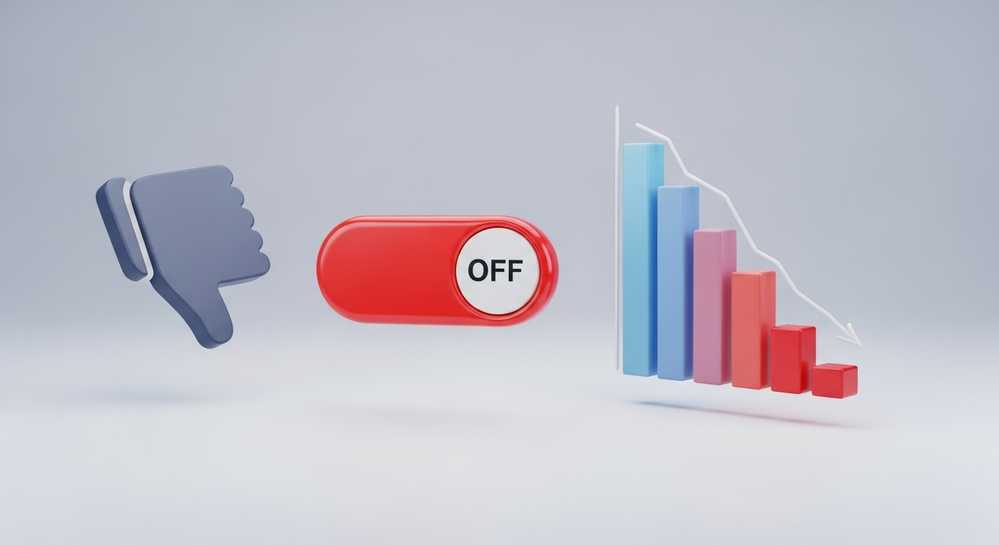
Key performance indicators signaling trouble
Key performance indicators signaling trouble
Your decisions must be driven by data, not intuition. Knowing when to turn off Facebook ads relies on analyzing concrete Key Performance Indicators (KPIs) that reflect your goals. Vague feelings about low performing ads are unreliable. If these core metrics are critically low after the learning phase, it is a clear signal that intervention is required. Monitoring this data is simpler with the best Facebook ads reporting tool for your needs.
- Return On Ad Spend (ROAS): A ROAS below 1 means you are losing money on every conversion. This is one of the most compelling reasons to pause or stop an ad immediately.
- Cost Per Acquisition (CPA): An unsustainable CPA drains your budget for minimal return. If the cost to acquire a customer exceeds their value or your set limit, the ad is not profitable.
- Click-Through Rate (CTR): A persistently low CTR indicates a disconnect between your ad and your audience. Your creative, copy, or targeting is likely failing to capture their attention.
When these indicators consistently miss your targets, the campaign is fundamentally inefficient. Ignoring these red flags leads to wasted ad spend. It prevents you from reallocating resources to more effective strategies. Acting decisively based on this data is key to successful advertising.
Diagnosing audience fatigue and ad irrelevance
Diagnosing audience fatigue and ad irrelevance
Even a successful ad will eventually lose effectiveness if shown repeatedly to the same audience. This common issue is known as audience fatigue. The key metric to monitor is Frequency, which measures the average number of times a user has seen your ad. If this number gets too high while your results decline, your audience is likely tired of the message. This is a critical factor in deciding when to turn off facebook ads.
- High Frequency: A score climbing above 5-7 often signals audience overexposure, though this benchmark can vary.
- Declining CTR: Your click-through rate falls as users become banner-blind to your creative.
- Rising CPA: Your cost per acquisition increases, indicating you are paying more for worse results.
Beyond fatigue, you must also assess ad irrelevance using Facebooks Quality Ranking. A low ranking is a direct penalty from the platform. It signals your ad is a poor match for the audience, resulting in higher costs and lower reach. Ignoring these clear data points on fatigue and irrelevance is a guaranteed way to waste your budget on a failing campaign.
When your budget is the problem not the ad
When your budget is the problem not the ad
Sometimes, the issue is not the ad itself but the financial strategy behind it. Your creative and targeting could be perfect, yet the campaign fails due to a flawed budget or bidding approach. This is a critical point to review before you decide when to turn off Facebook ads. An underfunded campaign is set up to fail from the start, regardless of how compelling the ad is.
- Insufficient Budget: A daily budget that is too low can prevent your ad from exiting the learning phase. The algorithm never gets enough data to optimize delivery, so your ad never reaches its full potential.
- Incorrect Bid Strategy: Bidding too low in a competitive auction will severely limit your ad’s reach. Similarly, choosing the wrong bid type for your objective can stifle performance.
Before you pause or stop a campaign, carefully review its financial settings. A simple adjustment to the budget or a switch in bid strategy can often rescue an ad that appears to be failing. This analysis is a non-negotiable step in effective campaign management.
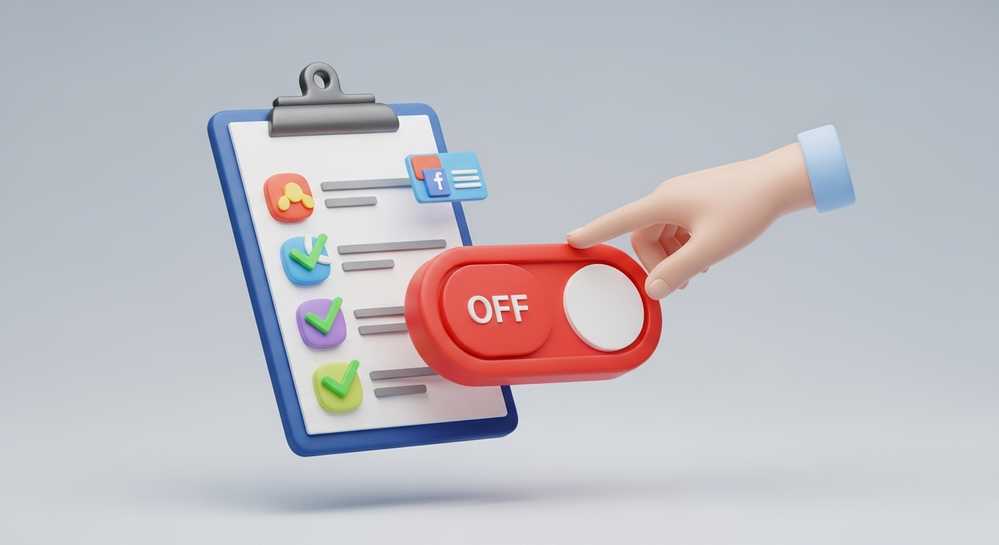
A simple checklist before you hit the off switch
A simple checklist before you hit the off switch
Before making a final decision, a quick diagnostic check ensures your choice is data-informed, not reactive. This final review helps clarify when to turn off Facebook ads versus when to optimize. Answering these points can reveal a hidden opportunity for improvement, saving a potentially valuable campaign from early termination. Use this process to confirm your next step is the correct one.
- Sufficient run time: Confirm the ad has fully completed the learning phase and gathered statistically significant data.
- Consistently poor KPIs: Look for sustained negative trends in ROAS, CPA, and CTR, not just a single bad day or two.
- Audience fatigue signals: Check for a high frequency score combined with declining engagement metrics.
- Untested variables: Consider if a different image, headline, or audience segment remains untested.
- Budget and bid strategy review: Verify that the financial setup is not the underlying cause of poor performance.
If your analysis confirms major, unfixable issues like consistently poor KPIs and you have ruled out other correctable problems, then the decision is clear. It is time to turn the ad off. You can then confidently reallocate your budget toward more promising campaigns with a higher potential for success.
Knowing when to disable a Facebook ad is about diagnosis not defeat. It requires a strategic look at performance data audience response and budget efficiency not just a gut feeling. This approach transforms a potentially wasted budget into a valuable learning opportunity for future campaigns. For consistent and effective advertising a stable foundation is crucial. Consider using a **Rent Facebook Account** service to ensure your campaigns are built on a reliable and high-performing platform from the start.